A deep dive into the 5,000 sq. ft Children’s Museum of Acadiana mural and the impact of the Talented Program for our students
In the heart of Downtown Lafayette, a transformation is taking place. Spanning over 5,000 square feet, the Children’s Museum of Acadiana’s 30th-anniversary mural is becoming a vibrant landmark for childhood wonder. But the art on the wall isn’t the only story worth telling.
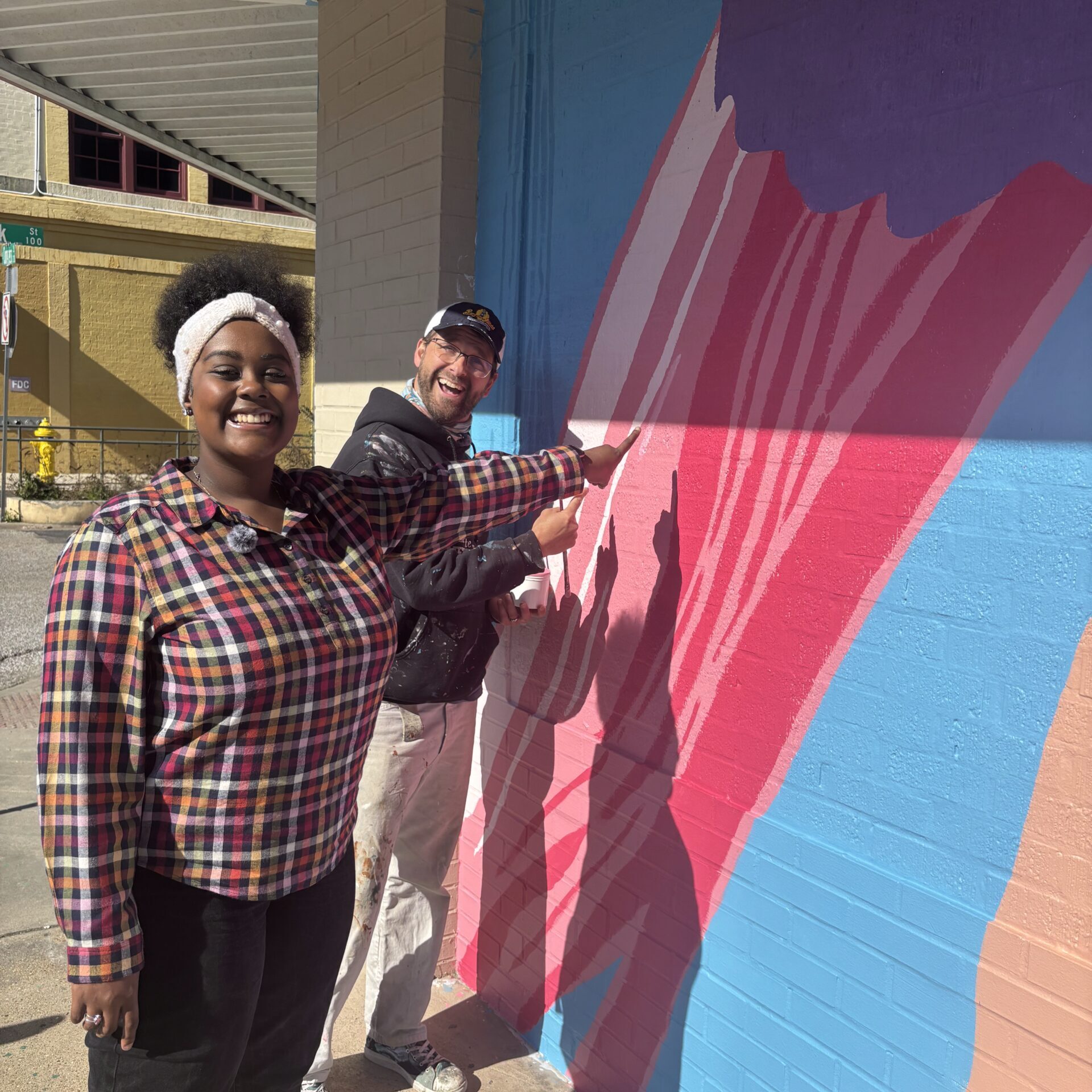
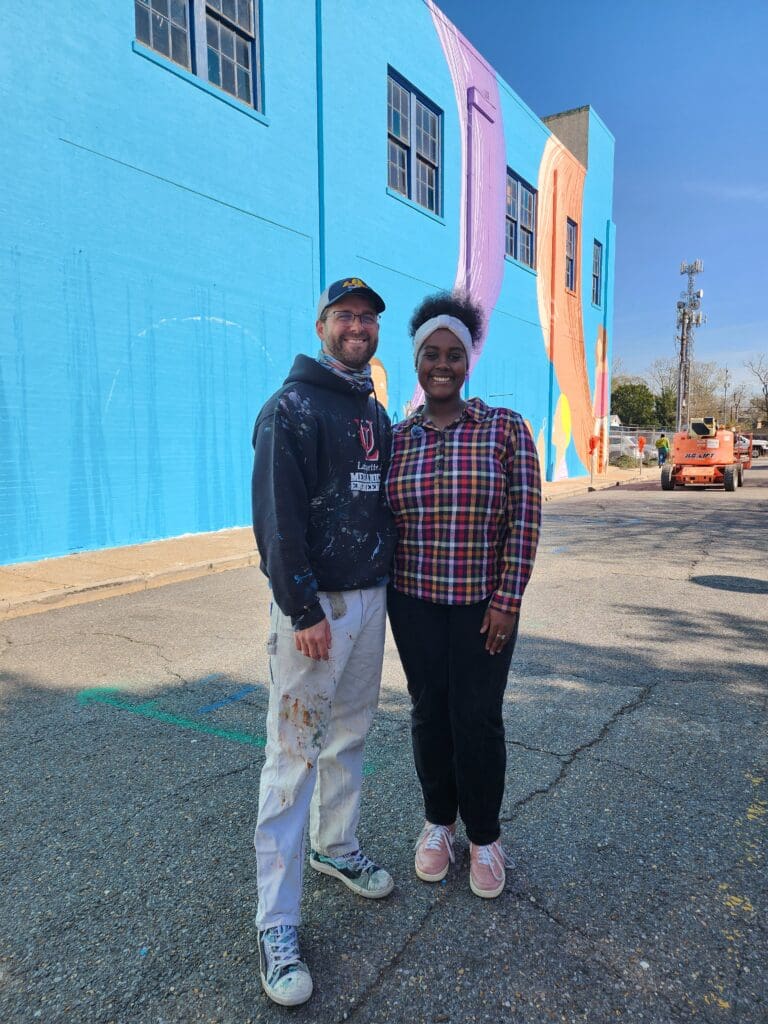
Last month, the project came full circle as Zhoriél Tapo—an 11th-grade Talented Theater student at Ovey Comeaux High and a former Scholastic Kids Press reporter—sat down with the mural’s lead artist, Dirk Guidry. Both are products of the Talented Program, representing two generations of local creative excellence, and two different parishes in the state of Louisiana!
In this interview, Zhoriél talks with Dirk about the scale of the project, his creative process, and what it’s like to return to his roots to leave a permanent mark on the city.
Zhoriél: Why was it important for you to put your name in the hat and be part of this project leading up to the Children’s Museum of Acadiana’s 30th anniversary?
Dirk: To have this opportunity to beautify the city—this beautiful canvas of 5,000 square feet—and to make my mark for years to come, especially every time I bring my kids to the Children’s Museum, it’s important to me and it’s very impactful. I know how great the benefits are for everybody.
Zhoriél: Tell me about your team and who do you have working on this project?
Dirk: Yeah, I have assembled the ‘Avengers’ of painters in the community! It’s all very local, talented artists that I’ve either come in contact with, or worked with before, or are part of different programs with them. And yeah, a team that I trust that can execute the design—and follow instructions—is really important. It also makes it a little bit more fun than me just being by myself. So, yeah, I have about 10 to 12 different artists.
Zhoriél: What was your creative process for this mural and who played a role in what is being created?
Dirk: They had a theme for it. They wanted to encapsulate childlike wonder, as well as trying to do Acadiana references in the mural, just for it to be kind of a landmark. So, incorporating all those different themes and parts, you know—and it’s a very narrow and wide mural when you actually look at it from the concept.
I plug it into Photoshop and then there’s so many layers. Layers upon layers. Some things work, some things don’t, and then you just kind of push and pull. And then, through the process, there’s a lot of back and forth, like, “Hey, we like these things; we don’t like these things.” So, you have to make the adjustments on the fly and everything like that.
But, all in all, it’s just still working toward that one vision. And for me, it was utilizing the bubbles; and the, you know—the bubble factory was always one of my favorite things at the Children’s Museum. Within the bubbles is just different, you know, the kids growing up with who they want to be when they grow up. So, we’re going to be putting those in the bubbles, as well as the Acadiana references; and even some of the kids’ drawings we might incorporate into the bubbles, too.
I just want everybody walking by, looking up, and dreaming, really, at the end of the day.
Zhoriél: That is powerful.
Zhoriél: I’m sure you’ve held meetings, had conversations and discussions and listened to input from others. How did all of that get transformed into this design?
Dirk: There are a lot of people involved in this, as far as stakeholders who are investing in this, to make sure that everybody’s happy and everybody can give their stamp of approval for the final design and, of course, proceed through to completion.
Zhoriél: There was a post on your Instagram page encouraging families to visit the design station at the Children’s Museum so the kids can leave their input and ideas. How do you plan to incorporate some of those, or have you already begun doing so?
Dirk: A little bit of both. We wanted to hear maybe what the kids want, and we also wanted that interactive component with it. Each profession might look different compared to what another kid might want to be. So, we just wanted to see what they came up with and just have them be able to say, “Hey, I was a part of the mural.”
You know, the fact that they were putting forth ideas like, “Hey, what do I love about Acadiana? What do I want to be when I grow up?”—I think that just triggers different kinds of creative thinking. It’s just a cool little interaction that they have, too. I hope that a kid walks up to me and says, “Hey, that’s what I wanted to be!”
Zhoriél: The Lafayette Consolidated Government, Downtown Lafayette, Acadiana Center for the Arts, and The Children’s Museum of Acadiana are all partners for this project. The work on this mural started only a few weeks ago. But what about the initial reactions from these partners? How have they been?
Dirk: It isn’t just an overnight project. So, they have to plant that seed and watch it grow. This has been years in the works. As well as the Children’s Museum is the 30-year anniversary, so they’re here to commemorate that, to celebrate that. Just all of those different entities coming together to bring the project to life because they know how beneficial it’s going to be for everybody. And yeah, they’ve been great to work with. Everybody has been great, because they know how fun this is for everybody. And it’s really just going to help tourism, cultural development, everything like that; so everyone’s bought into it, and I’m glad to be a part of it.
Zhoriél: I know you saw my reaction. I couldn’t stop staring.
Dirk: I love that!
Zhoriél: It’s beautiful!
Zhoriél: I’ve seen art projects locally that have an aspect of a community engagement, like standing in the Y in Lafayette. How will the community be able to engage with this mural?
Dirk: So, we actually are going to leave one of the bubbles blank at the bottom where you can go take your own little selfie or Instagram and put it up. And then, of course, I want them to kind of play a game of figuring out what they like the most out of it. Like, yes, I like the crawfish, or I like, you know, the wildlife, or, yes, I want to be a doctor when I grow up, or an artist when I grow up, you know, or a musician, or a reporter!
Zhoriél: Or a reporter! Yeah, we love a good selfie!
Zhoriél: I’ve been in the talented theater program since the first grade, and I was told that you were a talented student alum. What role do you think that program played in the artist you are today?
Dirk: I can confidently say that if I wasn’t in the talented program, I probably wouldn’t be right here talking to you about this mural. And of course the Talented Program, even though it wasn’t from this community, it was still the same emphasis on, hey, you’re talented and we’re going to kind of hone in those skills and help push you to hopefully do a career in art and everything like that. So, yeah, it played an integral part, I believe.
Zhoriél: It’s truly a great program.
Zhoriél: Many students will get to see this mural. Some who, like you, at an early age have been identified as talented visual artists. If you could say something to the young Mr. Dirk about the art that he would one day create, what would it be?
Dirk: I would say something like, you know, “Don’t give up on your dreams.” Don’t be afraid to fail in the art, and really just create; just show up. And even if you don’t feel like painting or drawing, just dedicate that time and just use it as a very productive outlet—because sometimes the days I don’t feel like doing it are the best days, and vice versa.
Zhoriél: There are lots of artistic people in the Lafayette community and I feel this is an important part of our culture. What would be your advice to others about making a difference through their respective art disciplines?
Dirk: We lean on art so much because it is culture. It encapsulates just all the different art forms of who we are: family, pride, all that. But just to be able to get the backing for it and the buy-in from the people—I think that we’re in a great spot where people are starting to understand, like, “Wait, I need to pay for the arts,” or “I need to help sustain them however I can to keep the artists here,” because we lose so many artists to just lack of opportunity. There are better markets elsewhere, so they may end up moving away or something like that. So, be persistent and really persevere through the tough times. And I mean, I was there, too. There were a few times where I didn’t think I was going to make it. I literally was about to give up, and I’m glad I didn’t. I’m glad I powered through and found the way. You know, the artists and even this project can inspire them to keep going because there’s so much talent out there, and I love to be a part of that, however, in whatever capacity I can be.
Zhoriél: Don’t give up!
About the Reporter: Zhoriél Tapo is a 17 year old 11th grade student in Lafayette, LA where she attends Ovey Comeaux High School. She is a member of the Renaissance, Beta, and Meaux Friends Clubs, and the volleyball, track, and softball teams. Zhoriél serves on multiple advisory boards including the Junior League of Acadiana’s Teen Spark Board, the Lafayette Parish High School Student Advisory Council, the Lafayette Consolidated Government’s Mayor-President Youth Advisory Council, and the Louisiana Tobacco Free Living Youth Advisory Board. Zhoriél currently volunteers as a member of the Ovey Comeaux Community and Family Engagement (CAFE) Team and BigBrothers BigSisters of Acadiana. She has been a talented theater student since elementary school and is in post production for a short film she wrote. Zhoriél was a Scholastic Kids Press Kid Reporter for 4 years and has interviewed former First Lady Michelle Obama, Prima Ballerina Misty Copeland, and Chef Emeril Lagasse, just to name a few. She plans to pursue a career in healthcare to help and serve others.