
George Rodrigue: Works 1965-2000
George Rodrigue, a beloved painter from the Acadiana arts community who created artworks heavily influenced by the southern Louisiana landscape and personalities which surrounded him. He began his career by creating works of what he termed “bayou surrealism” and “naive surrealism.” These were paintings which embedded local traditions and portraiture within mystical environments.
George Rodrigue: Works 1965-2000 showcases a group of artworks which span a 35-year evolution in Rodrigue’s artistic career. Beginning the timeline with an impressionistic portrait of his late father and ending with an abstracted depiction of his “Blue Dog,” visitors to AcA are able to witness the shifts in interest through color and environment within the assortment of the artworks on display.
The earlier years of Rodrigue’s artistic career were dedicated to depicting the people in the land of his native, southern Louisiana. Originally from New Iberia, this was his way of graphically interpreting his native Cajun culture, in effect preserving it in an increasingly modernized world.
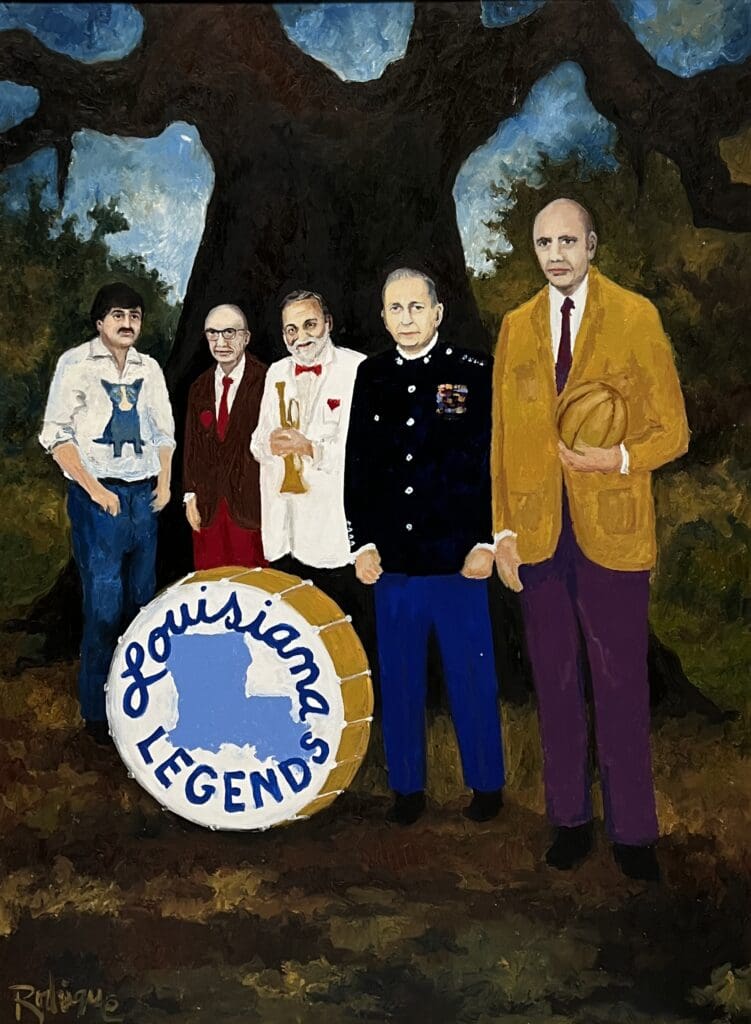
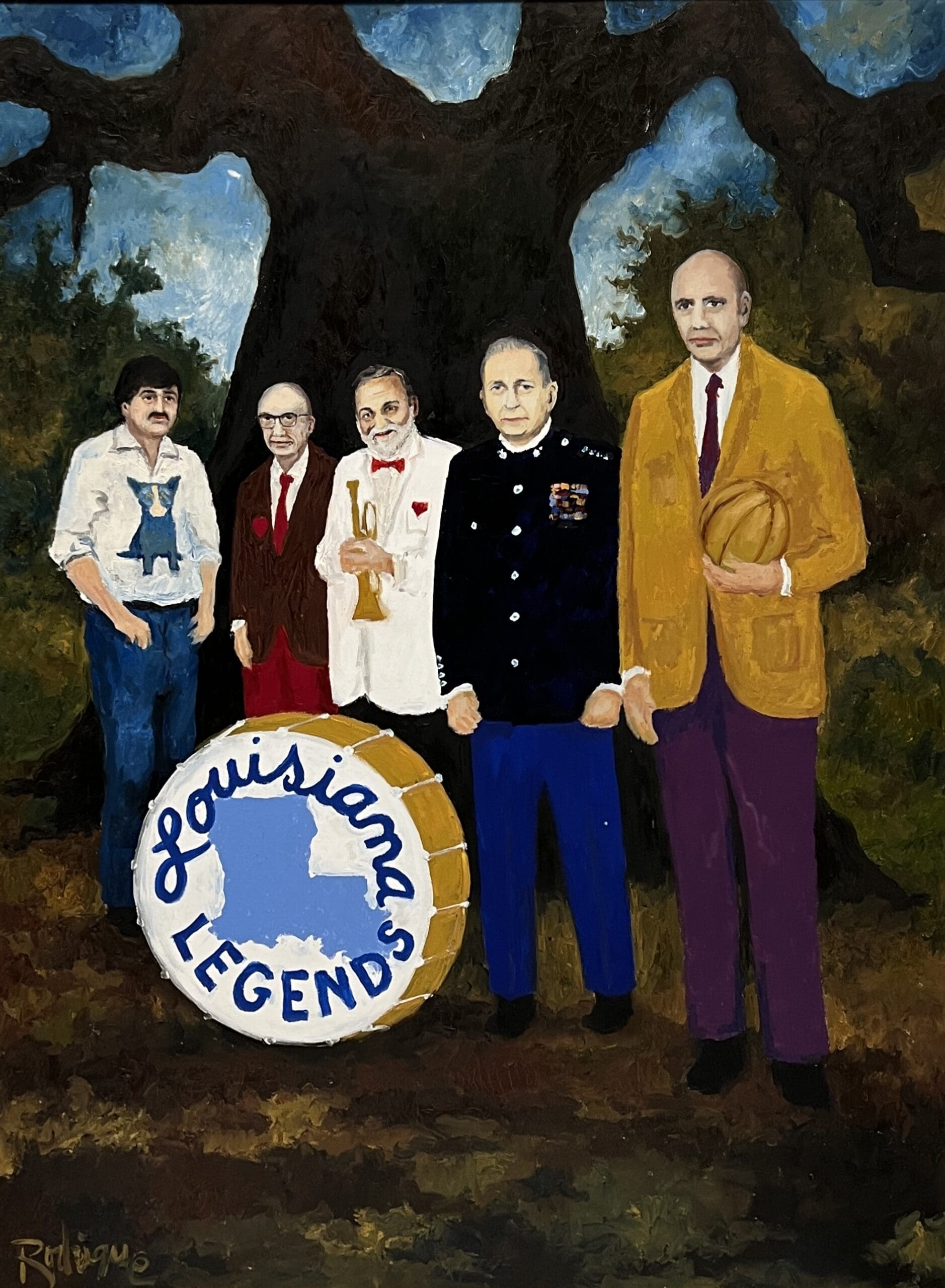
“Louisiana Legends”, 1991 oil on canvas, 48 x 36 in | Courtesy of Veronica Rodrigue
In 1984, Rodrigue made a fundamental shift in the direction of his artistic career. He developed
what is now known as the “Blue Dog”. Using his own dog, Tiffany, as a model, he developed a
series of paintings that depict the Cajun/French legend of the “loup-garou,” or “crazy werewolf
dog.” The “Blue Dog” has since become one of the most recognizable symbols in modern
American art; moreover, it depicts the transformation of Rodrigue’s artistic journey.
With this grouping of paintings, we are able to see a significant shift from traditional renderings
of his beloved surroundings into bold compositions of a contemporary and reinvented way of
representing Cajun/French culture and folklore.
- Curator Jaik Faulk